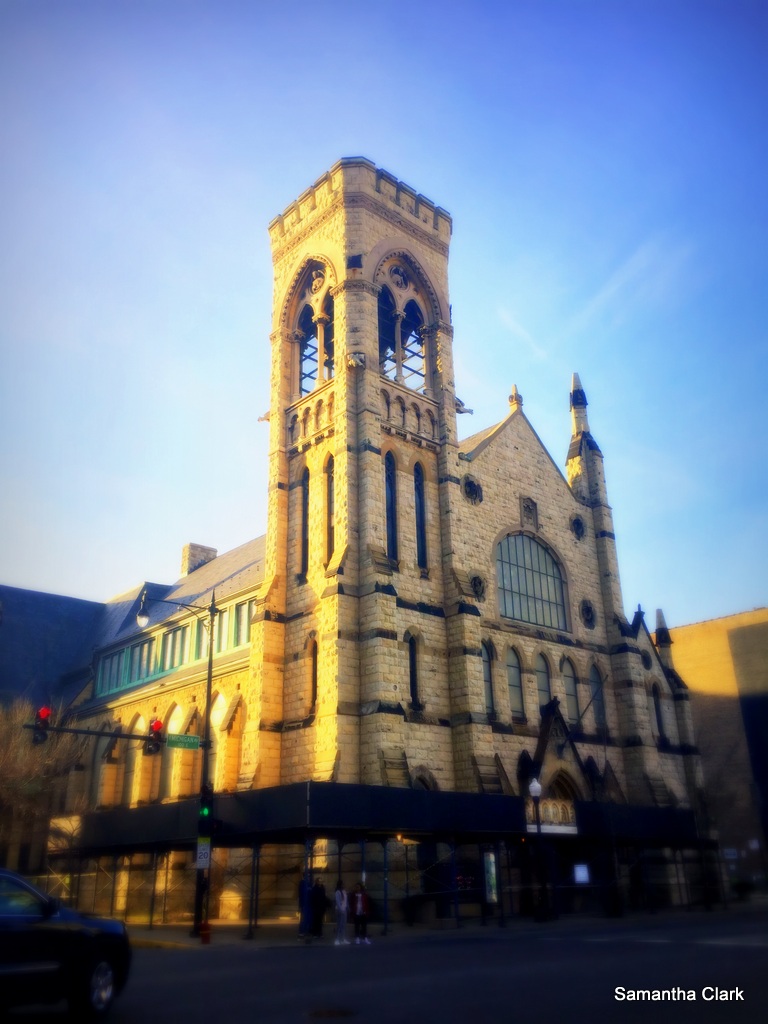
Showing posts with label South Loop. Show all posts

Thursday, February 9, 2017

Chicago: City of Bridges

When my daughter was around 4 years old we lived in Albuquerque, New Mexico. She was fascinated by bridges. She had a children's video about them, which she watched over and over, like kids will do. That summer we took a car trip with my mother, from our home, to Cleveland. When we arrived up north my daughter was amazed at the variety of bridges.

The highlight of the trip was our return home. My daughter and I left Cleveland on the Amtrak train back to the Southwest. We had a 5 hour layover transfer in Chicago. I don't know of any other city in America that can match Chicago for bridges. We were in awe.

Chicago has all the typical city bridges--freeway overpasses, rail lines, pedestrian walkways at airports, and connectors over rivers. In addition, the city was built in a swamp. Therefore, buildings are constructed in layers above the ground. Wacker Drive in downtown has three distinct levels, plus additional pedestrian links. To walk around the heart of the city is to constantly climb stairs and cross bridges.

The city has some unusual bridges. Part of the Pedway system is skyway bridges. It's is not limited to underground tunnels. There are industrial relics across the rivers. The Chicago Park District has an abundance of historic pedestrian bridges. If you look around you will find them everywhere.

When my daughter and I got off the train that summer trip I was surprised how accessible downtown Chicago was to the surrounding neighborhoods. It's easy to find somewhere to walk across the river. In some cities, like Los Angeles, few people walk. In other cities, natural barriers are too great. In New York there are few crossovers that span the long distance between Brooklyn and Manhattan. 

Still other places were designed without consideration for pedestrians. Getting in a vehicle, or riding the elevated free mass transit automated people mover, is the only way to get around downtown Miami. Chicago is unique.

Chicago is a city of bridges.
Vintage Postcard of Chicago Skyline
Downtown Chicago
Chicago River
South Branch of Chicago River
Uptown
South Loop
Pilsen
Lincoln Square
Lakeshore East
Hyde Park
Englewood
East Garfield Park
Chinatown in Armour Square
Bridgeport

Sunday, May 22, 2016

Budget Guide to Chicago

Summer 2016


When the weather warms tourists flock to Chicago. Since I get requests for advice about what to see and do in the city, I’ve compiled a budget guide for visiting. Please feel free to leave your own tips.


Choosing What to Visit


Finding the expensive attractions is easy. They are well known. They appear on every website and guide book. Whenever I travel I’m on a limited budget and appreciate finding the cheap stuff. I prefer to blow my money on one big great thing, then supplement the rest of the trip with low cost or free activities.

The first time I go to a new city I spend most of the time simply walking around. If I’ve already been somewhere I prefer a return visit to explore a theme. In a metropolitan area as large as Chicago there is no way to cover all the museums from Millennium Park north to Lincoln Park, let alone the rest of the city. The sheer number of choices is overwhelming.

When friends come to visit I’m left trying to find out clues about what might interest them. If they like architecture, do they want to explore a larger area by walking on our own, or do they want a shorter, but much more informative, professionally guided tour? Do they prefer trolley, subway, bike or walking? (I draw the line at Segways.)

What aspect of architecture is compelling? Do they want skylines and a history if how Chicago developed? Or do they have a specific interest in churches, gothic architecture, hotel lobbies, Frank Lloyd Wright, park district field houses and conservatories, high end retail buildings, famous restaurants, train depots, public markets, or something else?

 Pick a Theme


I like to explore a city around a theme. Right now I’m interested in the Edwardian Era of history. In Chicago I would take some architectural tours of buildings and foods (Chicagoans often combine architecture and eating or drinking), check for museum exhibits, and visit some house museums like Glessner.

If you’re looking for something educational you might explore birds, Civil War history, cooking and foods, bridges, or whatever floats your boat. Chicago has a number of museums and cultural centers devoted to specific ethnic heritages, including Swedish, German, Lithuanian, African-American, Ukrainian, Mexican and Puerto Rico.

Chicago has an endless number of tours, concerts and lectures. The universities often have free or low cost theater, music and lectures. Likewise, neighborhoods sponsor inexpensive events.

In my own neighborhood of Hyde Park this summer we’ll have a series of free weekly evening concerts on our main street (53rd), free park concerts and movies, a free 3-day Jazz Festival, gallery openings, inexpensive museums on the University of Chicago campus, 4th of July parade and picnics with fireworks all night, fire pits for cookouts at Promontory Point, lectures, author readings, a new comedy club, and stuff I’m probably forgetting.


I haven’t listed the neighborhood restaurants, architecture, main business district, book stores, public sculptures, the cluster of seminaries, the lakefront, beaches, or the parks. We’re just one small area of the city, yet we have more cultural institutions than some entire small cities.

 
Pick an Area of Town


I recommend sticking to a particular area of the city rather than trying to cover a large territory. Why waste vacation time stuck sitting in traffic or waiting for the subway? Some of the neighborhoods have easy access on public transit to The Loop, Navy Pier, or the Magnificent Mile, but plenty of neighborhoods don’t. If everything you want to do is near the Navy Pier, paying higher hotel costs is worth the easy access.


Leave the Car at Home


I don’t recommend driving around Chicago. It may seem cheaper, until you have to pay parking. Some hotels offer lower room rates with expensive parking garages. Be sure to find out both. Driving to places like downtown is a nightmare and you’ll have to pay for parking. Other neighborhoods require a long search for a free spot.

You may find an inexpensive AirBnB rental with free parking. Fine, but how are you going to get to tourist attractions? Will you have an hour bus ride each way, including having to transfer? Are you going to drive and pay high parking fees when you arrive at your destination?

 
You Don’t Have to Visit the Art Museum


I hereby give you permission to skip anything which doesn’t interest you. You might be happier spending $300 on one of the best dinners of your life rather than slogging through days of boring museums.


Budget Ideas


Since money doesn’t grow on trees, here are some ways to see and do popular attractions without breaking the bank.

·         Discount Tickets: There are passes, Groupon, and last minute discounts.
·         Skyline: Instead of the Willis or Hancock towers, grab a drink at a rooftop bar.
·         River: Take the water taxi from Michigan Ave to Chinatown.
·         Meet Up: Check for free public tours.
·         Museums: Visit less well known museums.
·         Discount Shopping: Chinatown, Clark St in Andersonville, 26th St in Little Village


Links to Low Cost/Free Stuff


Chicago on the Cheap http://chicagoonthecheap.com/


Wednesday, March 16, 2016

South Loop, Near South Side


On an unusually warm Sunday in late February my husband, daughter and I decided it was time for another neighborhood visit. A day earlier the city had been hit hard with storm gale force winds, causing widespread damage. Debris was littered everywhere. Service was still not fully restored to the downtown L trains. Likewise, buses were unusually crowded. We decided to stick close to home.

One of the biggest challenges doing my project is finding neighborhoods which look decent in photos during bleak winter days. Most places look best when lawns are green and flowers are in bloom. I’ve tried to cover the communities with the least amount of greenery during the coldest months. I picked South Loop to walk. The area is a dense mix of former wealth and extreme segregation, along with former industry and an abandoned red light district, without much landscaping.

Another challenge is figuring out the boundaries of the community areas. Chicago is one of those cities where dividing lines don’t stay put. For my previous neighborhoods I have relied on The Chicago 77 by Mary Zangs as my guide. I purchased the book at the Chicago Architecture Foundation, figuring they would have the most accurate information.

South Loop is a rapidly changing area. New skyscraper residential buildings have sprung up in what was historically the less desirable South Side. Zangs’ book lists the South Loop as stopping at Roosevelt Ave, where the Near South Side starts, as two separate neighborhoods.

The suddenly fashionable community south of Roosevelt Ave has been rebranded as part of The Loop rather than the South Side. The other guides I consulted, and Google Maps, show South Loop overlapping the entire Near South Side, with one exception—the shore line. The community area south of Roosevelt Ave has almost no access to the lake front. The lake shore, Museum Campus, and Northerly Island are separated from the residents by both freeway and railroad tracks.

While many of the sparkling new high rises have views of the lake, it’s a long hike for most residents to walk there. Otherwise it seems like a pleasant neighborhood, if still a bit rough around the edges. I was also surprised how few restaurants and retail services are available in such a densely populated neighborhood.

Rents have increased, particularly with the construction of newer luxury buildings, although the prices are still considered a bargain compared to similar buildings on the North Side in and around downtown.

We started our tour on the eastern side of the neighborhood from Museum Campus. The walk was enjoyable because townhomes line the sidewalks. I didn’t feel walled in by the high rises, like I did when I visited downtown Miami. Families gathered in parks and along the sidewalks.

We wandered across the Clarke Museum, a small white home in the middle of a compact park. Built in 1836 it’s fabled to be the oldest home in the city. Nearby is the Prairie Avenue Historic District, which once housed the wealthiest citizens after the Great Chicago Fire. A few of the mansions still remain.

We headed over to the western side. The area isn’t as good for walking. Some buildings remain abandoned and there is little to stop and do along the way. We passed blank areas of unapproachable landscaping and a large gated community near a freeway underpass.

We planned to grab an afternoon coffee. But as we reached the northern edge of the Near South Side by Roosevelt Ave the shops had long lines out the door. We ventured a bit further north to a diner. We sampled the difference between a traditionally grated potato latke versus a new improved version with pureed potatoes. The pureed latke reminded me of fried mush I’d eaten as a kid in NE Ohio. After potato overload we headed for home.